

Personal Loans in Canada: Types, Rates & How to Qualify
Personal loans give you a fixed lump sum you repay in set monthly payments. This guide covers the types of personal loans available in Canada, what they cost (and the 35% legal cap), the rules in your province, and how to qualify — with or without perfect credit.
What are personal loans?
A personal loan is a fixed amount you borrow and repay over a set term — usually 1 to 5 years — with regular, predictable payments. Most are unsecured (no collateral). You can use one for almost anything: debt consolidation, a home repair, or an emergency expense. Unlike a credit card, the structured payment schedule makes budgeting simple.

Types of personal loans
Standard loans
From banks and credit unions for good credit (650+). Competitive rates, amounts up to about $50,000, terms of 1–7 years.
Bad-credit loans
Income-focused lenders that approve lower scores. Higher rates (capped at 35% APR), smaller amounts. See borrowing with bad credit.
No-credit-check loans
Approval based on income and banking instead of a hard credit pull. Smaller amounts, faster funding. See how these work at LoansInstantly.
What personal loans cost — and the 35% cap
Compare loans by APR (interest + fees), not the monthly payment. Since January 1, 2025, the federal criminal interest rate is 35% APR — no legitimate Canadian lender may charge more than that on a personal loan. A smaller, faster loan carries a higher APR than a big bank loan, but it can never lawfully exceed 35%.
What Personal Loans Actually Cost Per Month: A Worked Example
Numbers beat adjectives. Here’s a $10,000 loan over 4 years at the rates different credit tiers commonly see:
| APR | Monthly payment | Total interest | Total repaid |
|---|---|---|---|
| 9% (excellent credit) | ~$249 | ~$1,950 | ~$11,950 |
| 15% (good credit) | ~$278 | ~$3,360 | ~$13,360 |
| 25% (rebuilding) | ~$332 | ~$5,920 | ~$15,920 |
| 34.99% (the legal cap) | ~$387 | ~$8,590 | ~$18,590 |
Two takeaways. First, the gap between tiers is enormous — the rebuilding borrower pays three times the interest of the excellent-credit borrower for the same money. Second, even at the cap, a shorter term slashes the damage: the same 34.99% loan over 2 years instead of 4 cuts total interest nearly in half. Term length is the lever most borrowers forget they hold. (Full breakdown in our guide to how personal loan interest rates work.)

Personal loans by province & territory
The 35% APR federal cap applies everywhere. Provinces also cap payday loan costs separately. Quebec effectively prohibits payday lending under its 35% cap.
| Province / Territory | Payday cost cap (per $100) | Federal APR cap |
|---|---|---|
| Ontario | $15 | 35% |
| British Columbia | $15 | 35% |
| Alberta | $15 | 35% |
| Manitoba | $17 | 35% |
| Saskatchewan | $17 | 35% |
| Nova Scotia | $19 | 35% |
| New Brunswick | $15 | 35% |
| Newfoundland & Labrador | $21 | 35% |
| Prince Edward Island | $15 | 35% |
| Quebec | No payday lending (35% cap) | 35% |
| Yukon / NWT / Nunavut | No payday-specific cap | 35% |
Fixed vs. variable rates
Fixed rate
The rate — and your payment — stays the same for the whole term. Easy to budget; protected from rate increases.
Variable rate
Moves with the prime rate. Payments can drop if rates fall, but rise if they climb. Lower starting rate, more uncertainty.
Secured vs Unsecured Personal Loans
Most personal loans in Canada are unsecured — approved on your income and credit alone, with nothing pledged. A secured loan backs the borrowing with an asset (a vehicle, savings, or home equity), and the difference shows up in three places:
- Rate. Collateral lowers the lender’s risk, so secured loans price meaningfully cheaper — often several points below the unsecured equivalent.
- Amount and term. Secured lending stretches further: bigger amounts, longer terms, because the asset anchors the deal.
- Consequence. Miss enough payments on a secured loan and the asset is genuinely at risk. An unsecured default damages your credit badly — but it doesn’t tow your car.
The rule of thumb: secure the loan only when the rate saving is real and the payment is comfortably affordable. Never pledge the family vehicle to shave one point off a loan you could carry unsecured.
How Personal Loans Affect Your Credit, Start to Finish
A loan touches your credit file at three moments. At application, the hard inquiry trims a few points for a few months — trivial if you shopped with soft checks and applied once. During repayment, every on-time payment adds positive history, and because installment debt isn’t counted in utilization the way card balances are, consolidating cards into a loan often raises scores within months. At payoff, the closed account keeps contributing as aged positive history for years. The pattern only breaks if payments slip — one 30-day late mark costs more than the original inquiry ever did, which is why the payment date belongs the day after payday, automated.
What Canadians Use Personal Loans For
The most common uses, roughly in order — and whether a loan is actually the right tool for each:
| Use | Good fit? | Why |
|---|---|---|
| Debt consolidation | ✔ Usually | One payment at a lower rate than the cards it replaces — the classic win |
| Car or home repair | ✔ Yes | A known one-time cost with a clear payoff date |
| Medical / dental | ✔ Yes | Predictable payments for an unavoidable expense |
| Moving / relocation | ✔ Often | Bridges a costly month; keep the term short |
| Weddings & vacations | ⚠ Caution | Borrowing for wants works only when the payment fits comfortably after the fun is over |
| Investing | ✘ Generally no | Guaranteed interest cost vs uncertain returns is a bad trade for most households |
How to qualify for personal loans
Most lenders ask that you are 19+ (age of majority varies by province), a Canadian resident with a bank account, and have steady employment income they can verify (often via Instant Bank Verification — a 60-second, read-only check that doesn’t affect your score). A stronger credit score earns a lower rate; if yours needs work, improving your credit first pays off — start by reading your own file with our credit reports guide.
Applying for Personal Loans, Step by Step
A strong personal loan application runs in order: size the amount from the need, check your own credit file, then pre-qualify with soft checks before committing.
- Decide the amount from the need, not the offer. Price the repair, the consolidation total, or the move — then borrow that number.
- Check your own credit file first. Ten free minutes that tells you which rate tier you’re shopping in and catches errors before lenders see them.
- Pre-qualify with soft checks at 2–3 lenders. Estimated rates with no score impact; only your final application triggers a hard pull.
- Compare offers by APR and total repayment. The friendliest monthly payment is often the most expensive loan — it’s just longer.
- Verify income and sign. Online lenders confirm income through IBV in about a minute; funds typically arrive by e-Transfer the same day, banks in a few business days.
Personal Loans Across Credit Situations
The same product looks different depending on where your file stands:
- Excellent credit (760+): you’re the customer everyone wants. Make banks and credit unions bid — single-digit APRs and fee waivers are negotiable, not advertised.
- Good credit (660–759): the full market is open at mid-range rates. Soft-check comparison earns its keep here — the spread between offers for the same file is widest in this band.
- Fair credit (560–659): banks tighten; reputable online lenders price on income via IBV. Keep amounts modest, terms short, and treat the loan partly as a credit-rebuilding tool.
- Rebuilding (below 560): approvals exist but at the top of the rate range. Borrow only for genuine needs, and pair the loan with the repair work — six months of progress on your file can re-price your next application entirely.
- No file at all: a first personal loan is buildable — start small with a lender that reports to both bureaus, repay perfectly, and the thin file stops being thin within a year.
Your Rights as a Borrower (and the Red Flags)
Canadian cost-of-borrowing rules require every lender to disclose, before you sign: the APR, the total cost of borrowing in dollars, the payment schedule, and any fees or penalties. If a “lender” resists putting those four numbers in writing, that’s the conversation ending itself. The other red flags worth memorizing:
- Upfront fees to “release” personal loans — the classic advance-fee scam; legitimate lenders deduct fees from the loan, never before it.
- Guaranteed approval — no honest lender approves anyone before verifying income.
- Pressure to decide today — real offers survive a 24-hour think.
- Quotes above 35% APR — over the federal cap means outside the law; walk away and report it.
- Mandatory “insurance” padding the payment — loan insurance must be optional in most cases; if it’s forced, its cost belongs in the APR you compare.
Repaying Early: How to Exit Personal Loans Ahead of Schedule
A loan agreement sets the slowest acceptable pace, not the required one. Whether your goal is interest savings or just the psychological win of being done, early repayment is where borrowers claw real money back — and it’s available on most products if you check one clause before signing.
Most open personal loans in Canada allow extra payments or full early payoff with little or no penalty — but “most” isn’t “all,” so check the prepayment clause before signing. When the clause is friendly, two habits shorten any loan: round the payment up (a $278 payment becomes $300 — painless, and months disappear off the end), and aim windfalls — tax refunds, bonuses — at the principal. On a 4-year loan, one extra payment a year typically clears it 4–5 months early and saves hundreds in interest. The math always favours the borrower who treats the schedule as a maximum, not a target.
When Personal Loans Are the Wrong Tool
An honest hub guide should also say when not to borrow. Skip the loan when:
- The expense is recurring. Borrowing for groceries or rent month after month means the budget is the problem — a loan delays the fix and adds interest. Start with our guide on how to get out of debt instead.
- You’d be consolidating onto a higher rate. If the new APR isn’t clearly below the average of what it replaces, the “consolidation” is just a longer, costlier loan.
- The need can wait two paycheques. Short waits are the cheapest financing on earth.
- You have cheaper credit unused. An existing line of credit at 10% beats a new loan at 20% every time. (See every option ranked in how to borrow money in Canada.)

Frequently Asked Questions
What credit score do I need for a personal loan in Canada?
Banks usually want 650+ for the best rates. Income-focused online lenders approve lower scores, and no-credit-check lenders weigh income and banking instead of your score — at higher rates.
Can I get a personal loan with bad credit?
Yes. Many lenders look at your income and ability to repay more than your score. Expect a higher APR (never above 35%) and a smaller amount.
How much can I borrow?
Typically $500 to $50,000 depending on income and credit. Bad-credit loans usually max out lower ($500–$15,000).
How fast can I get the money?
Online lenders can approve in minutes and fund the same day by e-Transfer. Banks often take several business days.
Is there a maximum legal interest rate?
Yes — 35% APR (the federal criminal-rate cap, effective January 1, 2025). No legitimate lender may charge more, including fees.
Do personal loans build credit?
Yes — an installment loan repaid on time adds positive payment history and improves your credit mix, two of the factors bureaus score. The effect compounds: today’s well-handled loan is tomorrow’s lower rate.
Are personal loans better than credit cards?
For carrying a balance, almost always — typical personal loans price well below the ~20% most cards charge, and the fixed schedule forces the balance to actually fall. For spending you repay in full monthly, the card is fine and the loan is unnecessary.
The Bottom Line on Personal Loans in Canada
Personal loans are the workhorse of Canadian borrowing: a known amount, a known payment, a known end date. Get your file in shape, pre-qualify with soft checks, compare APRs across at least three offers, and pick the shortest term you can comfortably carry. Do that, and a personal loan does exactly what it says on the tin — no surprises, no spiral, just a tool doing its job.
And keep the wider menu in mind: this page covers one product on a six-product shelf. If the need is small and urgent, very large, or ongoing rather than one-time, a different tool may price better — the full comparison lives in our guide to how to borrow money in Canada, and the rate mechanics behind every offer are unpacked in how personal loan interest rates work. Read those two alongside this one and you’ll walk into any lender conversation knowing more than the salesperson expects you to.
About the Author
Disclosure: The Finance Guys is part of the same group of companies as some of the lenders and services we link to, including Loanspot, and may be compensated when you apply through our links. Our guides report the facts — rates, rules, and the 35% cap — straight, regardless.
Sources: Justice Laws Canada — Criminal Code s.347 (35%); Bank of Canada — policy interest rate.
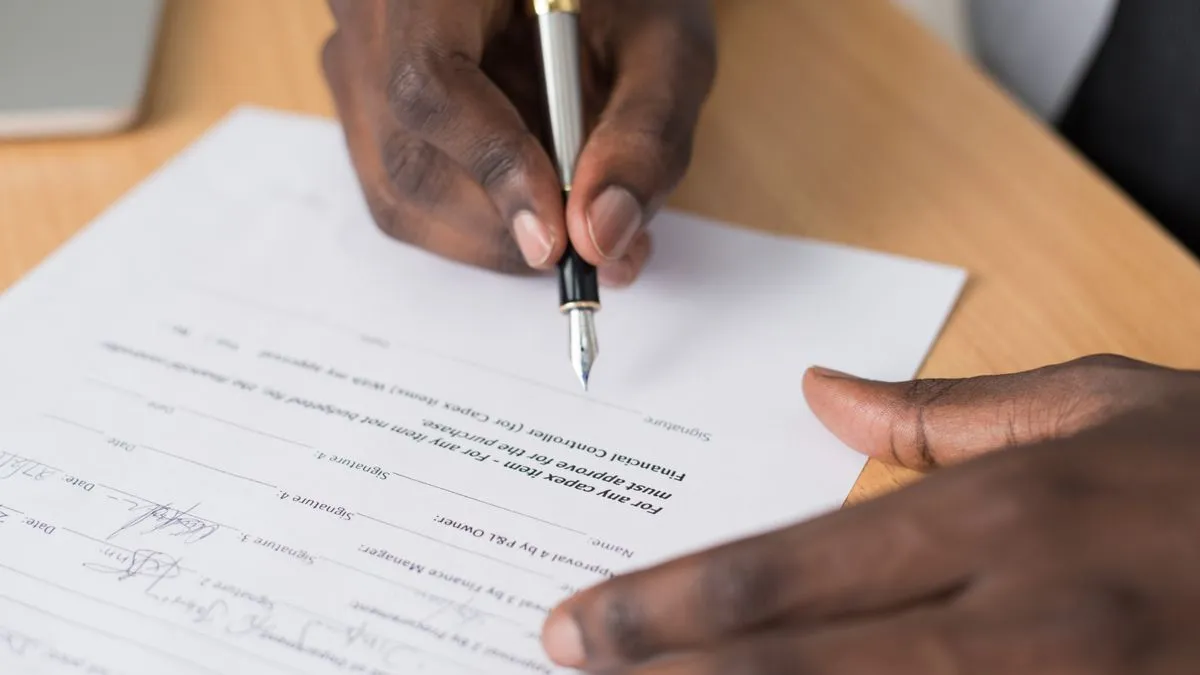
Photo by RDNE Stock project on Pexels.
Disclaimer: For informational purposes only; not financial advice. Consult a licensed advisor for your situation.