Alberta’s Minimum Wage: What You Need to Know

Retail worker at a point-of-sale in a Canadian shop
Discover Alberta's current minimum wage rate and how it impacts workers and employers. We explain the latest regulations and what you need to know about fair pay in Alberta.

Quick answer: Alberta’s minimum wage is $15.00 per hour in 2026, unchanged since October 1, 2018, and it is now the lowest general rate in Canada. Students under 18 can be paid $13.00 per hour for their first 28 hours in a week while school is in session. Servers get the full $15.00, tips are extra, and no increase has been announced for 2026.

Alberta’s minimum wage is the lowest hourly rate most employers in the province can legally pay, set under the Employment Standards Code. At $15.00 an hour it was the highest in Canada when it took effect in 2018; every other province and territory has raised its rate since, so by September 2026 Alberta sits at the bottom of the table, 35 cents below Saskatchewan and more than $5 below Nunavut.

This guide covers Alberta’s minimum wage rates for 2026, the student rule, how servers and short shifts are paid, a full province-by-province comparison with the fall 2026 increases, why the rate has stayed at $15 for eight years, what a minimum-wage paycheque looks like after tax, and what to do if you are paid less.

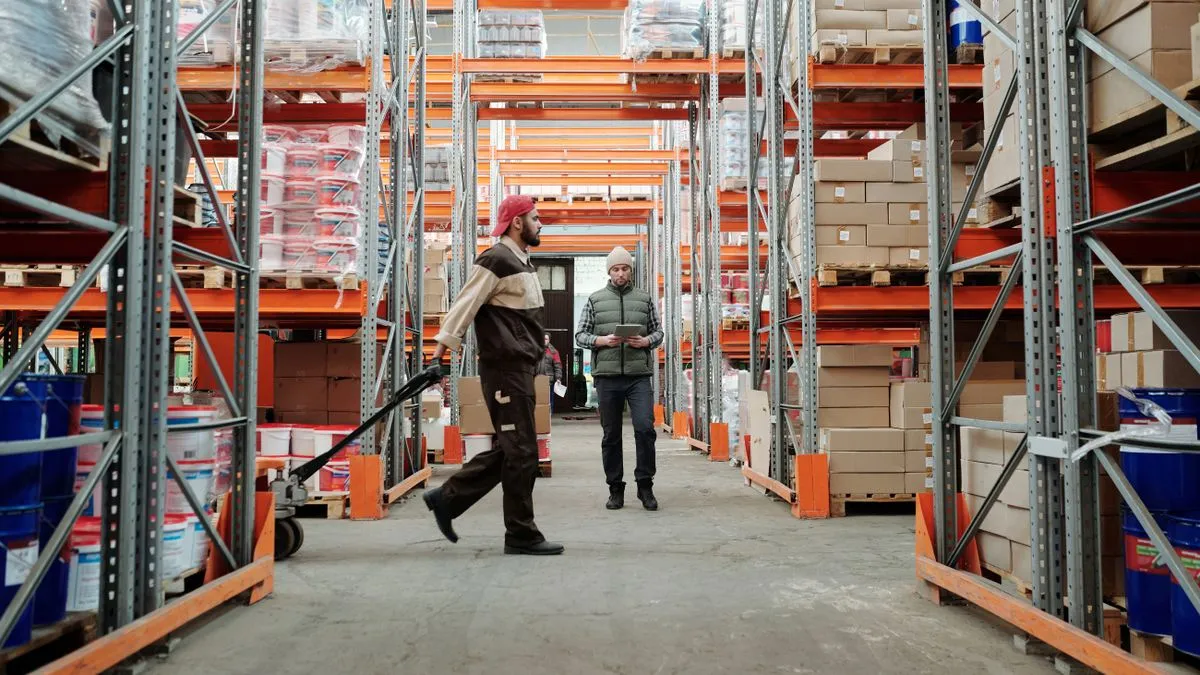
Warehouse workers managing inventory, a job that often pays Alberta's minimum wage of $15 an hour
Photo by Tiger Lily on Pexels

Key Takeaways

  • Alberta’s minimum wage is $15.00 per hour for most employees, frozen since October 1, 2018.
  • Students under 18 earn $13.00 for their first 28 hours a week while school is in session, and for all hours during school breaks.
  • Servers and bartenders get the full $15.00; Alberta scrapped its lower liquor-server rate in October 2016.
  • Every shift you are called in for pays at least 3 hours at minimum wage, even if you are sent home early.
  • In 2026 Alberta has the lowest rate in Canada; Nunavut ($20.17), BC ($18.25) and Yukon ($18.51) lead, and Ontario, Saskatchewan, Manitoba, Nova Scotia and PEI all rise again on October 1, 2026.

Alberta’s Minimum Wage Rates in 2026

Alberta’s minimum wage has four published rates in 2026: $15.00 per hour for most employees, $13.00 per hour for students under 18 with conditions, $598 per week for salespersons and certain professionals, and $2,848 per month for domestic employees who live in their employer’s home. All four have been unchanged since 2018 and 2019.

Worker categoryAlberta minimum rateIn effect since
General minimum wage (most employees)$15.00 per hourOctober 1, 2018
Students under 18 (first 28 hours in a school week; all hours on school breaks)$13.00 per hourJune 26, 2019
Students under 18, hours beyond 28 in a school week$15.00 per hourJune 26, 2019
Salespersons, land agents and listed professionals$598 per weekOctober 1, 2018
Domestic employees living in the employer’s home$2,848 per monthOctober 1, 2018

The weekly and monthly figures are floors for jobs where hourly tracking does not fit, such as commissioned car and direct-selling salespeople or live-in caregivers. Everyone else, including part-time, casual, seasonal and salaried staff, is measured against the $15.00 hourly rate: a salary divided by the hours actually worked cannot come out below it. The official rates and the list of covered occupations are published on the Government of Alberta minimum wage page.

Restaurant server taking an order, a typical Alberta minimum wage job at $15 an hour plus tips
Photo by Ketut Subiyanto on Pexels

The Student Rate: Alberta’s Minimum Wage for Workers Under 18

Students under 18 can be paid $13.00 an hour instead of Alberta’s minimum wage of $15.00, but only within limits: the lower rate covers the first 28 hours worked in a week while school is in session, and every hour past 28 in that week must be paid at $15.00. The province calls it the job creation student wage, and it has applied since June 26, 2019.

Three details trip up both teenagers and the businesses that hire them:

  • School breaks change the math. When school is not in session, such as summer holidays, winter break and spring break, the $13.00 rate applies to all hours worked, not just the first 28.
  • It is a student rate, not an age rate. A 17-year-old who has left school and is working full time is entitled to the full $15.00. The lower rate applies only to people under 18 who are attending school, including post-secondary and vocational programs.
  • Turning 18 ends it immediately. From your 18th birthday you earn Alberta’s minimum wage of $15.00 for every hour, whether or not you are still in school.

If you are starting your first job, remember that you need a Social Insurance Number before your first shift; our SIN explainer covers how to get one and who is allowed to ask for it.

Servers, Tips and the 3-Hour Minimum

Servers and bartenders in Alberta earn the full minimum wage of $15.00 an hour, and tips are paid on top. Alberta eliminated its separate lower rate for liquor servers on October 1, 2016, so unlike Quebec, which still runs a tipped-employee rate, there is no version of Alberta’s minimum wage that assumes gratuities will fill the gap. An employer cannot count tips toward the $15.00, and tips remain the property of the employee unless a written tip-pooling arrangement says otherwise.

Two more rules protect hourly workers on short or cancelled shifts:

  • The 3-hour minimum. Each time you are required to report to work, you must be paid for at least 3 hours at minimum wage, even if the shift is cut short or you are sent home after 45 minutes. A handful of jobs, such as school bus drivers and some part-time recreation programs, have a 2-hour minimum instead. The rule does not apply when you choose to leave early or ask for a shift under 3 hours.
  • Overtime starts at 8 hours a day or 44 hours a week. Overtime pay is 1.5 times your regular rate, so on Alberta’s minimum wage that is $22.50 an hour for every overtime hour, unless you have signed an overtime agreement that banks the hours as paid time off instead.

Uniform costs, cash-register shortages and customer walk-outs cannot be deducted from your pay in a way that takes you below the minimum, and the province publishes the full deduction rules alongside its employment standards.

Alberta’s Minimum Wage vs Every Province and Territory in 2026

In September 2026 Alberta’s minimum wage of $15.00 is the lowest in Canada, with Saskatchewan next at $15.35 until its October 1 increase, and Nunavut the highest at $20.17. Alberta is also the only province or territory with no annual indexing formula and no scheduled increase.

Province or territoryGeneral minimum wage (September 2026)Latest changeNext scheduled change
Alberta$15.00October 1, 2018None announced
Saskatchewan$15.35October 1, 2025$15.70 on October 1, 2026
New Brunswick$15.90April 1, 2026April 1, 2027 (indexed)
Manitoba$16.00October 1, 2025$16.40 on October 1, 2026
Newfoundland and Labrador$16.35April 1, 2026April 1, 2027 (indexed)
Quebec$16.60May 1, 2026May 1, 2027 (annual review)
Nova Scotia$16.75April 1, 2026$17.00 on October 1, 2026
Prince Edward Island$17.00April 1, 2026$17.30 on October 1, 2026
Northwest Territories$17.20September 1, 2026September 1, 2027 (indexed)
Ontario$17.60October 1, 2025$17.95 on October 1, 2026
British Columbia$18.25June 1, 2026June 1, 2027 (indexed)
Yukon$18.51April 1, 2026April 1, 2027 (indexed)
Nunavut$20.17September 1, 2026September 1, 2027 (indexed)
Federal (banks, airlines, telecoms, interprovincial transport)$18.15April 1, 2026April 1, 2027 (indexed)

Two things to read from the table. First, the gap is widening: by October 1, 2026 five more jurisdictions move up while Alberta’s minimum wage stays put, leaving it $2.95 behind Ontario and $3.25 behind BC. Second, the federal rate matters in Alberta too. If you work for a bank, an airline, a telecom, a railway or an interprovincial trucking company, you are covered by the Canada Labour Code and earn at least $18.15, not $15.00. Rates were verified on September 6, 2026 against each government’s published figures; provinces with indexing formulas announce the exact new amount a few months before it takes effect.

Cafe worker opening the shop, a job commonly paid Alberta's minimum wage
Photo by Tim Douglas on Pexels

Why Is Alberta’s Minimum Wage the Lowest in Canada?

Alberta’s minimum wage is the lowest in Canada because it has been frozen at $15.00 since October 2018 while every other province and territory has raised its rate, most of them automatically each year through a link to inflation. Nothing about the $15 figure was low when it arrived; it was the first $15 minimum wage in the country. The ranking flipped because the rate stopped moving.

The sequence explains the politics. Between 2015 and 2018 the provincial government of the day raised Alberta’s minimum wage from $10.20 to $15.00 in four steps, the fastest climb of any province. The government elected in 2019 kept the $15.00 general rate but introduced the $13.00 student wage and, after an expert panel review, did not adopt a lower rate for liquor servers. Since then the province has neither raised the rate nor tied it to the consumer price index, which is the mechanism BC, Ontario, Yukon and the federal government now use to push their rates up without a new decision each year.

Purchasing power tells the rest of the story. Canada’s consumer price index has risen by roughly a fifth since 2018, so $15.00 today buys about what $12.50 bought when the rate was set. Living-wage estimates for Calgary and Edmonton, which price rent, food, transit and child care for a family, run well above $20 an hour. Alberta’s average hourly wage sits in the mid-$30s according to Statistics Canada’s Labour Force Survey, which is why the minimum-wage debate in Alberta is mostly about the retail, food service, hospitality and care jobs where the floor is the actual pay.

Alberta’s Minimum Wage History

Alberta’s minimum wage rose from $10.20 to $15.00 between September 2014 and October 2018, then stopped. Here is the full timeline of the modern rate:

DateGeneral rateWhat changed
September 1, 2014$10.20Last increase under the old annual formula
October 1, 2015$11.20First step of the $15 plan; liquor-server rate rises to $10.70
October 1, 2016$12.20Liquor-server rate eliminated; servers earn the general rate
October 1, 2017$13.60Third step
October 1, 2018$15.00Alberta becomes the first province at $15
June 26, 2019$15.00Job creation student wage of $13.00 introduced for students under 18
2020 to 2026$15.00No change; every other province and territory passes Alberta

For anyone tracking the long view, the Government of Canada’s minimum wage database on the federal labour program site lists every provincial rate change back to 1965, and it shows the same pattern: Alberta led the country for about a year in 2018 and 2019, then fell to the bottom by 2024.

What is minimum wage in Alberta: workers in front of a Canadian flag

Is Alberta’s Minimum Wage Going Up in 2026?

No increase to Alberta’s minimum wage has been announced for 2026, and as of September 6, 2026 the Government of Alberta’s minimum wage page still lists $15.00 with no future date. Changes are made by regulation under the Employment Standards Code, which means the provincial cabinet can set a new rate without passing a new law, and past increases were announced several months ahead with an October 1 start date.

What would signal a change: a line in a provincial budget or throne speech, a consultation notice from the ministry responsible for jobs and labour, or a regulation posted on alberta.ca. Until one of those appears, plan on $15.00. If you are budgeting for 2027, note that the neighbouring rates keep moving on fixed dates: Saskatchewan and Manitoba on October 1, BC on June 1, the federal rate on April 1, so an Alberta worker considering a move or a federally regulated job can compare against a known number.

Who Is Covered by Alberta’s Minimum Wage, and Who Is Exempt?

Alberta’s minimum wage covers almost every employee in the province: full-time, part-time, casual, seasonal, hourly, salaried and commissioned staff in provincially regulated workplaces, which is the large majority of jobs. The exemptions are narrow and mostly cover people who set their own hours or are regulated elsewhere:

  • Federally regulated employees such as bank, airline, telecom, railway and interprovincial trucking staff, who follow the federal minimum wage of $18.15 instead.
  • Salespersons, land agents and listed professionals who are covered by the $598 weekly minimum rather than the hourly rate, including car salespeople and commissioned direct sellers who work mainly away from the employer’s premises.
  • Live-in domestic employees, covered by the $2,848 monthly minimum.
  • Real estate brokers, securities salespersons and insurance agents paid entirely by commission, who are excluded from the minimum wage rules but still covered by other employment standards.
  • Farm and ranch employees on family-run operations, some of whom fall under separate rules; check the current agricultural exemptions before assuming either way.
  • Genuine independent contractors, who are not employees at all; a label on an invoice does not decide this, the working relationship does, and a contractor who is really an employee can claim the difference.

Municipal, provincial and most public-sector employees in Alberta are covered, as are workers on temporary permits and international students working within their permit hours. Immigration status never lowers the rate.

What a Minimum-Wage Paycheque Looks Like in Alberta

A full-time worker on Alberta’s minimum wage earns $600 a week before deductions, which is $31,200 a year on a 40-hour week, or about $2,600 a month. After federal and provincial income tax, CPP contributions and EI premiums, most single earners keep roughly $2,200 to $2,250 a month in 2026, depending on their credits and whether their employer offers benefits.

Hours per week at $15.00Weekly grossMonthly gross (approx.)Annual gross
20 hours (part-time)$300$1,300$15,600
30 hours$450$1,950$23,400
40 hours (full-time)$600$2,600$31,200
40 hours plus 4 overtime hours at $22.50$690$2,990$35,880

Three money moves that matter more at this income than at any other:

  • File a tax return even if you owe nothing. At $31,200 you qualify for the quarterly GST/HST credit and, if you are 19 or older and not a full-time student, the Canada Workers Benefit, which together can add well over $1,000 a year. Our guide to the GST/HST credit payment dates shows when the money lands, and the 2026 benefit payment calendar covers the rest.
  • Check every pay stub against the rules above. Missing 3-hour minimums, unpaid overtime past 8 hours in a day and deductions for shortages are the three most common ways an Alberta minimum-wage paycheque comes up short.
  • Treat credit as a tool, not a top-up. When a $15 income has to bridge a car repair or a rent gap, the cost of borrowing decides whether next month is easier or harder; before you borrow, read how to choose a loan in Canada so the cheapest option is the one you pick.

Paid Less Than Alberta’s Minimum Wage? What to Do

If you are being paid less than Alberta’s minimum wage, you can recover the difference: the Employment Standards Code makes any agreement to work for less than the minimum void, and the province’s Employment Standards office investigates complaints and orders back pay at no cost to the worker. Here is the order that works:

  1. Do the math from your own records. Keep your schedule, clock-in times and pay stubs. Multiply hours by $15.00 (or $13.00 for eligible student hours), add 3-hour minimums and overtime, and compare to what was paid.
  2. Raise it with the employer in writing. Many shortfalls are payroll errors, and a dated email or message creates the record you need if it goes further.
  3. File an Employment Standards complaint. Use the online complaint form on alberta.ca. Complaints must generally be filed within six months of your last day of work, so do not wait for a job to end and then sit on it.
  4. Expect an investigation, not a court date. An officer reviews both sides’ records, and if the claim holds the employer is ordered to pay the difference. Retaliating against an employee for filing a complaint is itself a violation.

Two cautions. Cash-paid jobs are still covered, and a lack of pay stubs weakens the employer’s position, not yours. And if the shortfall was labelled a “training rate”, know that Alberta has no training wage: the first hour of the first day is paid at Alberta’s minimum wage like any other.

Salaire minimum en Alberta : le taux général est de 15,00 $ de l’heure en 2026, inchangé depuis le 1er octobre 2018; les étudiants de moins de 18 ans peuvent recevoir 13,00 $ pour leurs 28 premières heures par semaine pendant l’année scolaire.

Alberta’s Minimum Wage FAQ

What is the minimum wage in Alberta in 2026?

Alberta’s minimum wage is $15.00 per hour in 2026 for most employees, unchanged since October 1, 2018. Students under 18 can be paid $13.00 per hour for their first 28 hours in a week while school is in session. Salespersons have a $598 weekly minimum and live-in domestic employees a $2,848 monthly minimum.

Is Alberta’s minimum wage going up in 2026?

No increase has been announced. As of September 2026 the Government of Alberta still lists $15.00 with no future rate or date, and Alberta has no inflation-indexing formula. Any change would be announced by regulation, historically several months before an October 1 start.

How does Alberta’s minimum wage compare to other provinces?

It is the lowest in Canada. In September 2026 the rates range from $15.00 in Alberta to $20.17 in Nunavut, with BC at $18.25, Ontario at $17.60 (rising to $17.95 on October 1, 2026), Quebec at $16.60 and Saskatchewan at $15.35 (rising to $15.70 on October 1, 2026). The federal minimum wage is $18.15.

What is the minimum wage for students under 18 in Alberta?

$13.00 per hour for the first 28 hours worked in a week while school is in session, then $15.00 for any hours beyond 28 in that week. During school breaks the $13.00 rate applies to all hours. Anyone 18 or older, and anyone under 18 who is not attending school, earns the full $15.00.

Do servers make minimum wage in Alberta?

Yes. Servers and bartenders earn the full $15.00 per hour and keep their tips on top. Alberta eliminated its lower liquor-server rate on October 1, 2016, and an employer cannot count tips toward the minimum wage.

Why is Alberta’s minimum wage so low?

Because it has been frozen since October 2018 while every other province and territory raised its rate, most of them automatically with inflation. Alberta’s $15.00 was the highest in Canada when it took effect; it fell to the bottom because it stopped moving, not because it was cut.

How much is minimum wage in Alberta per year?

At 40 hours a week, Alberta’s minimum wage works out to $600 a week, about $2,600 a month and $31,200 a year before tax. A single full-time earner typically takes home about $2,200 to $2,250 a month after income tax, CPP and EI.

What can I do if my employer pays less than Alberta’s minimum wage?

Document your hours and pay, raise it with the employer in writing, then file a free complaint with Alberta Employment Standards through alberta.ca, generally within six months of your last day of work. Any agreement to accept less than the minimum is void, and the employer can be ordered to pay the difference.

About the Author

Mikeal Janifa, Personal Finance Writer

Mikeal Janifa writes plain-English guides on money, benefits, and everyday finances for Canadians at The Finance Guys. Read more from Mikeal Janifa →

Photos by Tiger Lily, Ketut Subiyanto and Tim Douglas on Pexels.

Disclaimer: For informational purposes only; not legal or financial advice. Minimum wage rates and employment standards change; verify the current figures with the Government of Alberta and your provincial employment standards office before acting on them.

Share the Post:

Related Posts