
Personal loan interest rates in Canada aren’t one fixed number — they’re set by your credit score, your income, the loan amount and term, and the Bank of Canada’s policy rate. The strongest borrowers see single-digit APRs; higher-risk borrowers pay more, up to the legal ceiling of 35% APR. This guide explains how personal loan interest rates are set, what they cost in real dollars, and how to qualify for a lower one.
In this guide
- What determines personal loan interest rates
- Average personal loan interest rates by lender type
- Interest rate vs. APR
- The 35% legal ceiling
- What a rate difference really costs
- Fixed vs. variable rates
- How your credit score maps to your rate
- How the Bank of Canada moves your rate
- Which fees count toward APR
- Checking rates without hurting your credit
- Do personal loan interest rates differ by province?
- Mistakes that quietly raise your rate
- How to get a lower rate
- Frequently asked questions
What determines personal loan interest rates in Canada
Lenders price personal loan interest rates on risk. The lower the risk that you’ll miss payments, the lower the rate you’re offered. Five things move the number:
- Your credit score — the single biggest factor. A higher score signals reliability and unlocks lower rates.
- Income and debt load — steady income and a low debt-to-income ratio show you can comfortably repay.
- Loan amount and term — very small loans and very long terms often carry higher rates.
- The Bank of Canada’s policy rate — the base rate that ripples through to what lenders charge, especially on variable-rate loans.
- Secured vs. unsecured — backing a loan with collateral usually lowers the rate.
None of these factors work alone. A borrower with a fair credit score but a long history with their credit union may still beat the advertised rate, while a high score paired with maxed-out credit cards can push an offer up. Lenders read the whole file.
Average personal loan interest rates by lender type (2026)
Where you borrow matters almost as much as your credit profile. Here’s how personal loan interest rates typically compare across Canadian lender types — the ranges are illustrative, and your offer depends on your file:
| Lender type | Typical APR range | Best suited to |
|---|---|---|
| Major banks | ~8%–15% | Good-to-excellent credit, existing customers |
| Credit unions | ~8%–14% | Members; often flexible on fair credit |
| Online lenders | ~10%–34.99% | Fast approvals; wider range of credit profiles |
| Alternative/subprime lenders | ~25%–34.99% | Rebuilding credit; income-based approvals |

Banks usually advertise the lowest personal loan interest rates but have the strictest approval criteria. Online lenders approve a wider range of borrowers and move faster, in exchange for a wider rate range. If your credit is strong, make banks and credit unions compete; if it’s rebuilding, a transparent online lender under the 35% cap is the realistic lane.
Interest rate vs. APR — what you actually pay
The advertised interest rate is only part of the cost. APR (Annual Percentage Rate) includes the interest rate plus fees, so it’s the only honest way to compare two loans. A loan with a lower interest rate but high fees can cost more than one with a slightly higher rate and no fees — the APR tells you which is actually cheaper.
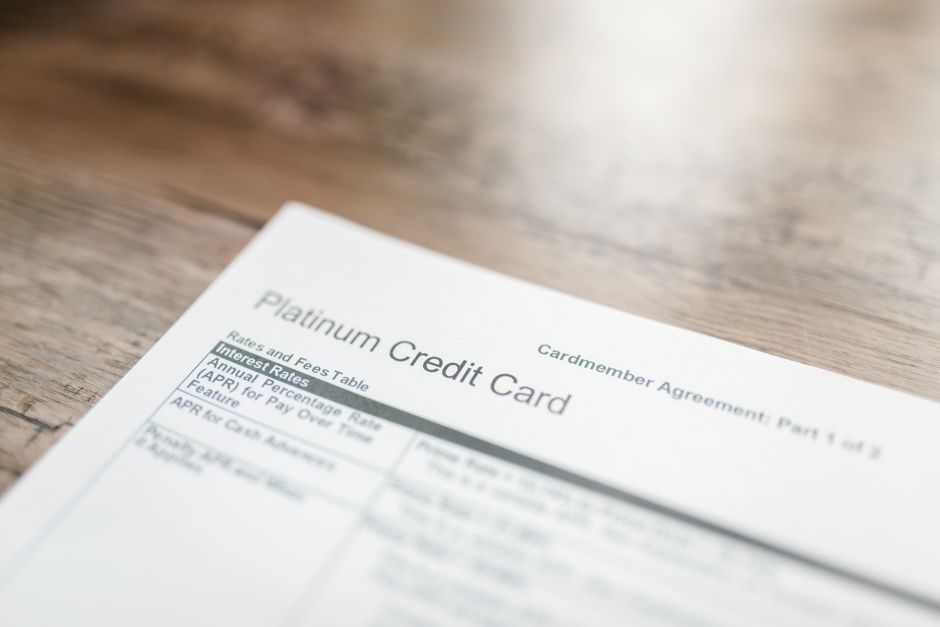
Always ask for the APR and the total cost of borrowing (principal + all interest + fees) before you sign. Canadian lenders are required to disclose both — the Financial Consumer Agency of Canada’s guide to loans and lines of credit explains exactly what must appear in your agreement.
The 35% cap — the legal ceiling in Canada
Since January 1, 2025, the federal criminal interest rate is 35% APR. No legitimate Canadian lender may charge more than that on a personal loan, including fees. If you’re ever quoted a rate above 35% APR, walk away — it’s not a lawful offer.
The one carve-out to know: provincially licensed payday loans are regulated separately, and their cost per $100 borrowed works out far above what any installment loan charges. That’s a different product with different rules — for an ordinary personal loan, 35% APR is the hard ceiling.
What a difference in personal loan interest rates really costs
Percentages feel abstract, so here’s the same $5,000 loan over 36 months at four different personal loan interest rates. The monthly payments look deceptively close — the total interest is where the gap explodes:
| APR | Monthly payment | Total interest paid | Total repaid |
|---|---|---|---|
| 10% | ~$161 | ~$810 | ~$5,810 |
| 20% | ~$186 | ~$1,690 | ~$6,690 |
| 30% | ~$212 | ~$2,640 | ~$7,640 |
| 34.99% (the cap) | ~$226 | ~$3,140 | ~$8,140 |
Read that bottom row again: at the legal maximum, you repay over $3,100 in interest on a $5,000 loan — nearly four times the interest of the 10% borrower. Every percentage point you negotiate or qualify your way out of is real money back in your budget.

Fixed vs. variable rates
A fixed rate stays the same for the life of the loan, so your payment never changes — easy to budget. A variable rate moves with the lender’s prime rate: payments can fall if rates drop, but rise if they climb. If predictability matters more to you than the chance of saving a little, fixed is usually the safer choice.
Most unsecured personal loans in Canada are fixed-rate. Variable pricing shows up more on lines of credit — if you’re weighing the two products, our guide to personal loans in Canada breaks down when each one fits.
How your credit score maps to your rate
Most lenders price personal loan interest rates in score bands. The exact numbers vary by lender, but the pattern is consistent — a stronger score means a materially lower rate:
| Credit score band | Typical rate range (illustrative) |
|---|---|
| 760+ (excellent) | Lowest available APRs |
| 700–759 (good) | Competitive, mid-range APRs |
| 650–699 (fair) | Higher APRs |
| Below 650 (rebuilding) | Highest APRs, up to the 35% cap |

These ranges are illustrative — your real rate depends on the full picture. The takeaway: even a small score improvement can move you into a cheaper band. If your score is holding you back, it’s worth working on your credit before you apply — check your file first using our free guide to credit reports in Canada.
How the Bank of Canada’s policy rate moves your rate
The Bank of Canada sets the overnight policy rate — the price banks pay to borrow from each other. When the policy rate climbs, lenders’ own funding gets more expensive, and personal loan interest rates follow within weeks. When it falls, advertised rates drift down too, though usually more slowly.
After the rate spike of 2023 and the cutting cycle that followed through 2024–25, borrowing costs in 2026 sit well below their peak. Practical takeaway: the rate environment matters for when you borrow, but your credit profile still decides your rate within it. You can track the current policy rate on the Bank of Canada’s website.
Which fees count toward APR
Because the 35% cap is measured on APR — not the bare interest rate — it matters which charges count. In general, the cost-of-borrowing math includes:
- Origination or administration fees charged to set up the loan
- Brokerage fees, if a broker arranged the loan
- Mandatory insurance a lender requires as a condition of the loan
Optional add-ons (like genuinely optional loan insurance) and default charges such as NSF fees sit outside the advertised APR — which is why two loans with the same headline rate can still cost different amounts. Before signing, ask one question: “What is the total amount I will repay if I make every payment on time?” A trustworthy lender answers it in one number.
Not sure which loan product you should even be pricing? Start with our guide on how to choose a loan in Canada, then come back and shop the rate.
How to check personal loan interest rates without hurting your credit
Rate-shopping doesn’t have to bruise your credit file — if you do it in the right order:
- Use pre-qualification tools first. Most online lenders show an estimated rate using a soft inquiry, which is never visible to other lenders and doesn’t affect your score.
- Save the hard inquiry for your final choice. A full application usually triggers a hard pull. One or two are harmless; a dozen in a month looks desperate to the algorithm.
- Income-verified approvals help. Many online lenders now verify income through instant bank verification (IBV) — a read-only, 60-second connection to your bank that doesn’t touch your credit report at all.
Shop wide with soft checks, then apply once. That’s how you find the lowest of the personal loan interest rates available to you without leaving fingerprints on your file.
Do personal loan interest rates differ by province?
Mostly, no — and that surprises people. The 35% APR criminal-rate cap is federal law, so the ceiling on personal loan interest rates is identical in every province and territory. A lender quoting you 29% APR in Ontario could lawfully quote the same in Nova Scotia or Alberta.
Where geography does sneak in:
- Quebec layers its own consumer-protection rules on top of federal law, and some online lenders simply don’t operate there — fewer competitors can mean fewer low offers.
- Payday loans (a separate, provincially regulated product) have different cost caps in each province — but that’s not a personal loan, and the comparison only flatters the installment loan. Our payday loan vs installment loan guide runs the full cost math side by side.
- Local credit unions are provincially regulated and sometimes undercut the national banks for members in their own province — always worth one quote.
So when you see “personal loan interest rates Ontario” or “best rates BC” pages promising provincial secrets, read them skeptically: the rate you’re offered travels with your credit file, not your postal code.
Mistakes that quietly raise your personal loan interest rate
Plenty of borrowers qualify for a better rate than the one they end up signing. The usual culprits:
- Taking the first offer. One quote tells you nothing. Personal loan interest rates for the same borrower routinely differ by 5–10 points between lenders.
- Applying everywhere at once. A burst of hard inquiries drags your score down mid-shopping — pre-qualify with soft checks first, then submit one application.
- Maxed-out credit cards on application day. High utilization is read as financial stress. Paying a card below 30% of its limit a month before applying can move you a full rate band.
- Stretching the term to shrink the payment. A 60-month term on a small loan looks comfortable monthly but multiplies total interest — and often carries a higher rate than a 24- or 36-month term.
- Ignoring the fees. A “low-rate” loan with a fat origination fee can carry a higher APR than the honest mid-rate offer next to it.
How to get a lower personal loan rate
Lower rates are earned in order: raise your credit score first, compare multiple offers, and choose the shortest term you can afford.
- Raise your credit score first — pay on time, keep card balances under 30% of your limit, and fix any errors on your report.
- Compare offers — personal loan interest rates vary a lot between lenders. Shopping around is the simplest way to avoid overpaying; you can compare personal loan rates on WizardLoans to see where you stand.
- Choose a shorter term — shorter terms usually carry lower rates and far less total interest, if the monthly payment fits your budget.
- Consider a secured loan — collateral can lower the rate, but you risk the asset if you can’t repay.
- Borrow only what you need — a smaller balance is cheaper to carry, whatever the rate.
Frequently Asked Questions
What are average personal loan interest rates in Canada in 2026?
Typical personal loan interest rates run from roughly 8% APR for excellent-credit borrowers at banks and credit unions to 34.99% APR at alternative lenders — the legal maximum. Most approved borrowers land somewhere between 10% and 30%, depending on credit score, income and term.
What determines my personal loan interest rate in Canada?
Mainly your credit score, income and existing debt, the loan amount and term, the Bank of Canada’s policy rate, and whether the loan is secured. The lower the lender’s risk, the lower your rate.
What is the difference between interest rate and APR?
The interest rate is the base cost of borrowing; APR adds in fees, so it reflects the true yearly cost. Always compare loans by APR, not the headline interest rate.
What is the maximum personal loan interest rate in Canada?
The federal criminal interest rate cap is 35% APR (effective January 1, 2025). No legitimate lender may charge more than that, including fees.
How does the Bank of Canada rate affect my loan?
The Bank of Canada’s policy rate influences variable rates: if it rises, variable payments can go up; if it falls, they can drop. Fixed rates stay the same regardless.
Should I choose a fixed or variable rate?
Fixed gives you a predictable payment for the whole term. Variable can be cheaper if rates fall but riskier if they rise. If budgeting certainty matters most, choose fixed.
Do online lenders charge higher personal loan interest rates than banks?
Often, but not always. Online lenders serve a wider range of credit profiles, so their rate ranges stretch higher — but for the same borrower, a competitive online lender can match or beat a bank. Compare APR offers for your actual file rather than assuming.
Can I get a lower rate with bad credit?
Improving your score before applying is the most effective way. You can also compare lenders, choose a shorter term, or offer collateral. Expect higher rates with weaker credit, but never above the 35% cap.
The bottom line
Personal loan interest rates in Canada are earned, not fixed. Strengthen your credit, compare APRs across lender types, keep the term tight, and borrow only what you need — and never accept anything above the 35% cap. As the $5,000 example shows, a few points of APR can mean thousands of dollars over the life of the loan.
About the Author
Disclosure: The Finance Guys is part of the same group of companies as some of the lenders and services we link to, including Loanspot, and may be compensated when you apply through our links. Our guides report the facts — rates, rules, and the 35% cap — straight, regardless.
Sources:Bank of Canada — policy interest rate; Justice Laws Canada — Criminal Code s.347 (35% criminal interest rate); FCAC — loans and lines of credit.
Photos by RDNE Stock project, Kindel Media and Erik Mclean on Pexels.
Disclaimer: This article is for informational purposes only and is not financial advice. Consult a licensed advisor for guidance specific to your situation.